
Red River Parole and Probation
Parole and probation both allow a person to live in the community under rules, but they arise in different ways. Parole usually follows a term of imprisonment. The person has left physical prison custody while the sentence continues under supervision. Probation is ordered by a court and may be imposed instead of imprisonment or after a shorter custodial part. The Louisiana DPS&C Division of Probation and Parole supervises eligible people in both groups. A Red River Parish Jail release record can show when local custody ended, while the state supervision record answers whether parole or probation remains active.
The distinction matters when reviewing a Red River Parish record. A status showing parole supports release from imprisonment, but it is not the same as full discharge. Probation can begin after time served, after a suspended sentence, or without a prison term. The 39th Judicial District Court judgment and minutes state the legal sentence. DPS&C records show the state-administered supervision status and office assignment. For the underlying local release event, use the complete search and records path on the Red River Parish released inmates page.
| Point | Parole | Probation |
|---|---|---|
| How it begins | Release from imprisonment under supervision after a lawful parole path | A court orders community supervision as part of the sentence |
| Main record source | DPS&C master record, Committee on Parole disposition, and assigned supervision office | Court judgment and minutes, plus the assigned DPS&C supervision office |
| What it does not mean | It does not mean the sentence has been discharged | It does not prove a person served a state-prison term |
| How it ends | Discharge, expiration, or another official action recorded by the responsible authority | Completion, discharge, revocation, or another court and agency action |
A short vocabulary check prevents common mistakes:
- Parole
- Conditional community supervision after release from imprisonment.
- Probation
- Court-ordered supervision that may replace or follow a custodial term.
- Discharge
- The official end of the relevant custody or supervision obligation.
- Revocation
- An official decision that supervision was violated and may be withdrawn.
- Absconder
- A person alleged to have stopped required contact or otherwise failed to comply with supervision.
Verify Red River Post-Release Supervision
Begin with identity, not a name alone. Louisiana DPS&C routes its public person search through official locator instructions and Louisiana VINELink. An exact DPS&C number is the best key. If it is unavailable, use the exact name and compare date of birth, age, location, or other displayed identifiers. Copy the literal status. “Parole,” “supervision,” “released,” and “discharged” are not interchangeable.
Use the following order to verify a Red River Parish post-release supervision record:
- Identify the last custodian. Red River Parish Jail, a DPS&C institution, and a federal facility maintain different custody records.
- Search Louisiana VINELink with the DPS&C number or exact identity. Record the status and retrieval date.
- Review the 39th Judicial District Court judgment or minutes when the question concerns whether probation was imposed in the Red River Parish case.
- Use the statewide Probation and Parole directory to locate the office assigned by DPS&C.
- Contact that office with the full name, DPS&C number if known, date of birth, and case parish. Ask for publicly releasable status and office confirmation.
A VINELink result can support the inquiry, but it is not a complete supervision file. Red River LAVNS is designed for parish custody changes such as release, transfer, escape, or case-status changes. The state DPS&C record and assigned Probation and Parole office are the better sources for ongoing state supervision. If an online tool fails to load, that technical problem is not evidence of discharge. Use the telephone or office route.
Important: Release from a building and discharge from a sentence are separate events. Confirm both before describing a Red River Parish supervision status.
Note: A transfer alert means custody changed hands; it does not establish release to the community or the start of parole.
Red River Supervision Follows Assignment
A Red River Parish conviction does not fix the supervising district forever. Office assignment can follow residence and DPS&C administration. That is the distinctive local point: do not assume the jail, parish clerk, or nearby district supervises the person merely because the case began in Red River Parish. The statewide directory should be checked for the current assignment, and the office should confirm its role before its contact details are treated as case-specific.
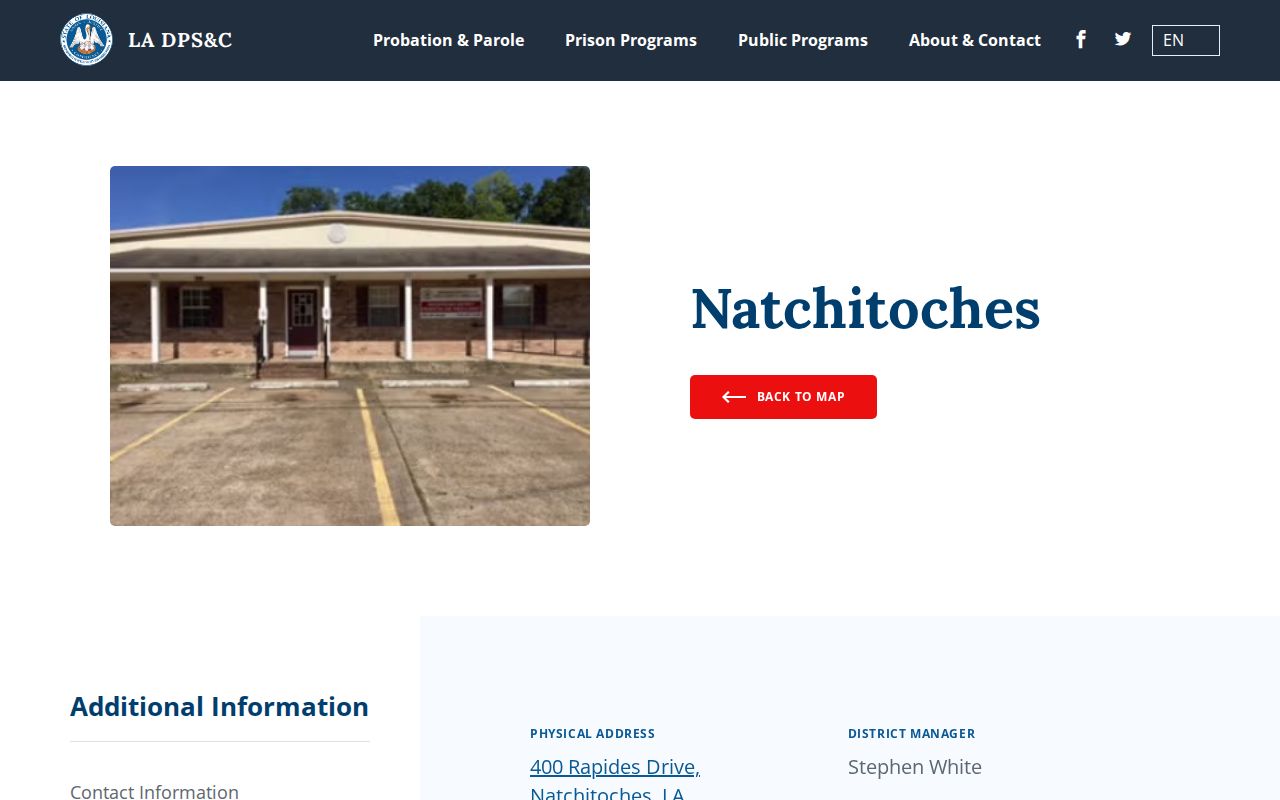
The official DPS&C location page identifies the Natchitoches District as serving DeSoto, Natchitoches, Red River, Sabine, and Winn parishes. It is a sound starting point for Red River Parish parole and probation questions, subject to assignment confirmation.
Louisiana DPS&C Natchitoches District
400 Rapides Drive
Natchitoches, LA 71457
(318) 332-8487
Monday through Friday, 8:00 a.m. to 4:30 p.m.
The official Natchitoches District page shows the Red River Parish service area and published office details.
This office routing is more reliable than using a conviction parish as a permanent proxy. A person may live elsewhere after release, and the agency can assign supervision accordingly.
Red River Parole Hearing Records
The Committee on Parole within the Louisiana Board of Pardons & Committee on Parole decides suitability when the law allows a hearing. DPS&C performs the separate task of calculating parole eligibility from the official master record. Eligibility is therefore not an approval, and approval is not the physical release date. La. R.S. 15:574.4 contains the principal offense-date and sentence-dependent eligibility framework, with exclusions that prevent a simple universal formula.
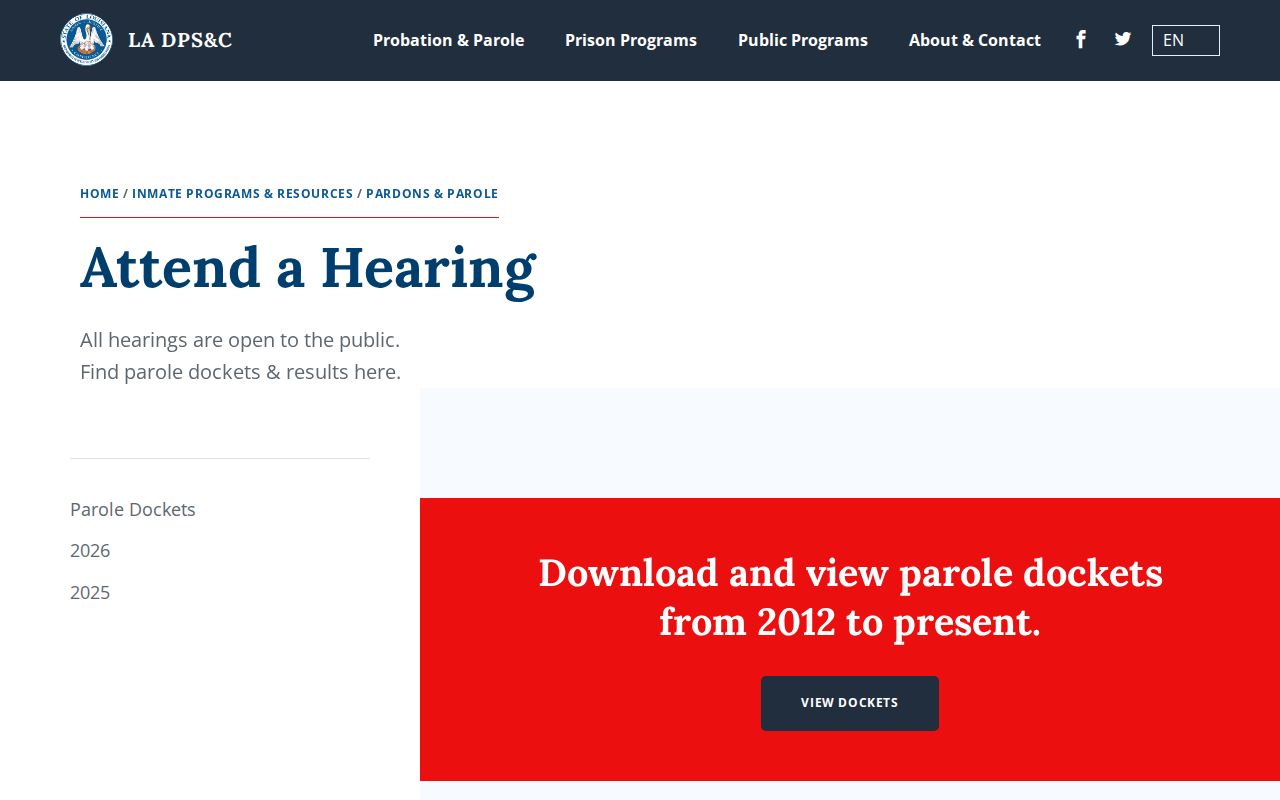
The board publishes an annual schedule and individual facility or parish-level dockets. A Red River Parish search should start with the annual “Parish Level” entry, then move to the person-specific docket and later result or written disposition. “Continued” or “deferred” means no final release approval on that date. “Denied” is not release. “Granted” authorizes a path that can still depend on an approved plan, a certificate, date computation, or another hold.
The official parole docket and results hub separates scheduled hearings from later outcomes.
Even after a grant, Red River Parish release verification still needs the actual custody event. A later supervision record can confirm community parole. It should not be used to invent the earlier walk-out time.
Red River Supervision Violations
Conditions of parole or probation come from the governing sentence, release certificate, and agency rules. They may address reporting, travel, treatment, payment, contact, or other case-specific duties. Public summaries should stay at that high level unless an official record states the individual terms. A violation allegation may lead to a warrant, hearing, revocation, and return to custody, but each is a distinct event that must be confirmed from its own source.
No official Red River Parish-specific probation or parole absconder list was found. An unsuccessful online search is not an absconder finding. Nor does a public address gap prove the person failed to report. Verify a warrant with the issuing court or law-enforcement custodian. Verify active supervision and assigned office with DPS&C. If a revocation case appears, use the actual docket or disposition instead of a social post.
The sequence may be long: imprisonment, release on parole, an alleged violation, a warrant, a revocation hearing, revocation, and reincarceration. The earlier release remains a real historical event even if the person later returns to custody. Current status and release history should therefore be recorded as separate fields.
When Red River Parish records point to a violation, note which source supplies each fact. A court warrant can establish that judicial process began. A DPS&C status can establish the agency's current supervision entry. A jail roster can show renewed local custody as of its update. None of those facts alone supplies the full sequence, so compare names, identifiers, dates, and case numbers before joining the records into one timeline.
Note: “Absconder” is an agency or legal status, not a conclusion drawn from a missing address or failed public search.
Red River Supervision Discharge
Supervision ends only through an official event. A person may complete the term, receive a discharge, have probation terminated by the court, or encounter a revocation or other action. The best source depends on the event. DPS&C holds state parole and probation status. The 39th Judicial District Court holds the local judgment and later court orders. Red River Parish Jail records only the local custody episode and does not certify that state supervision later ended.
For a state record that no longer appears clearly online, a focused request can rely on La. R.S. 15:574.12. Although the law generally protects prison, presentence, preparole, and clemency material, it identifies public information that includes disposition, sentence length, and discharge date. Ask for the discharge date and disposition tied to the correct DPS&C number rather than demanding a complete confidential file.
A projected date should also remain separate from discharge. The former is a calculation that may move. The latter records the end of the relevant obligation. When the question is how the expected prison date was calculated, consult the Red River Parish projected release date resource and then confirm the current master record.